
Clean water is essential for maintaining a healthy lifestyle. However, many homeowners overlook one critical aspect of water hygiene—the cleanliness of their water storage tanks. Over time, water tanks can accumulate dirt, sediment, algae, bacteria, and other contaminants that may affect water quality and pose health risks.
If you’re experiencing water quality issues at home or in your commercial property, it may be time to schedule a professional Water Tank Cleaning Kashipur service. Understanding the warning signs can help prevent serious health concerns and ensure your family has access to clean, safe water.
Why Regular Water Tank Cleaning Is Important
Water tanks continuously store water for daily use. Dust, rust particles, mud, insects, and microorganisms can gradually build up inside the tank. Without regular cleaning, these contaminants can affect water quality and lead to various health problems.
Benefits of regular water tank cleaning include:
- Safe and hygienic water supply
- Prevention of bacterial growth
- Improved water quality and taste
- Reduced risk of waterborne diseases
- Longer lifespan of the water tank
- Better performance of plumbing fixtures
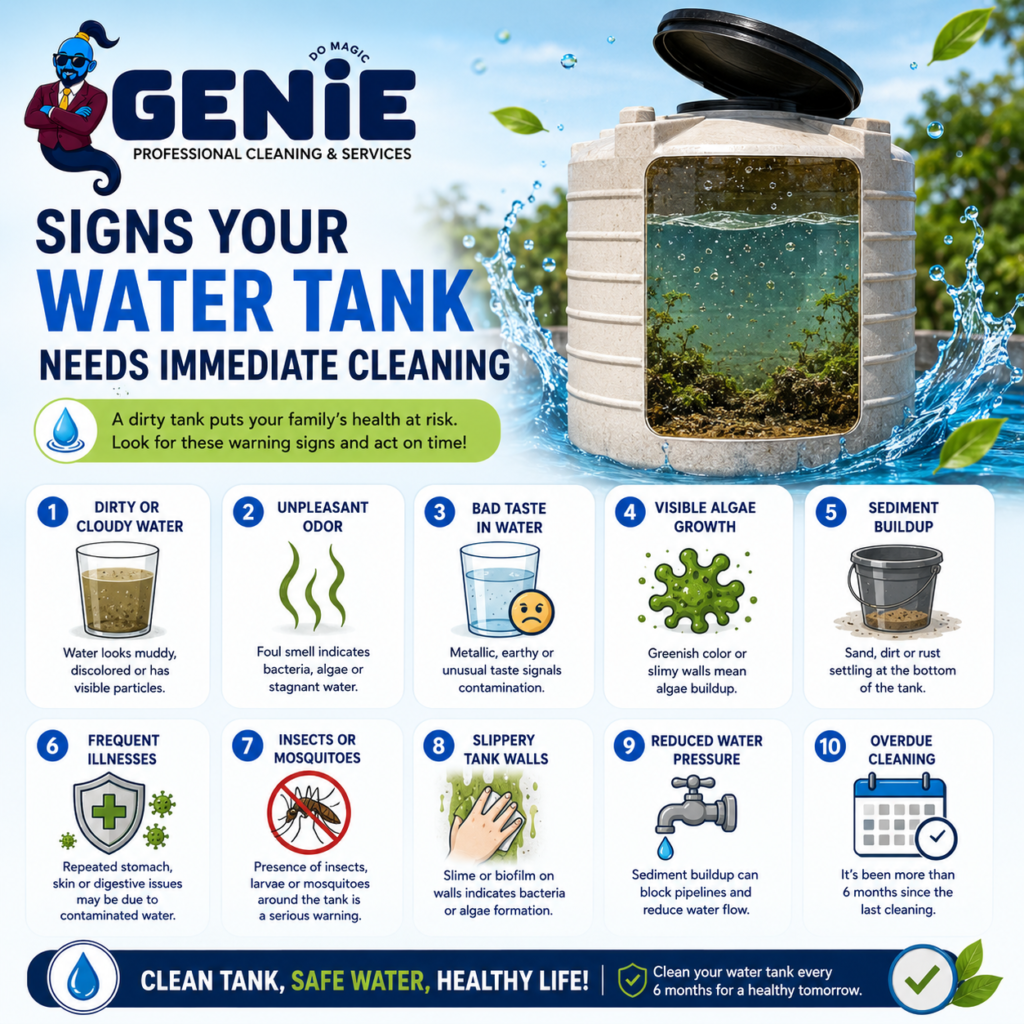
Signs Your Water Tank Needs Immediate Cleaning
1. Dirty or Cloudy Water
One of the most obvious signs is water that appears muddy, cloudy, or discolored.
Common indicators include:
- Brown or yellow-colored water
- Visible particles floating in water
- Murky appearance when filling a glass
- Sediment settling at the bottom
This often indicates excessive dirt, rust, or sludge accumulation inside the tank.
2. Unpleasant Odor from Water
Clean water should be odorless. If you notice a foul smell coming from your taps, the water tank may contain:
- Bacterial growth
- Algae buildup
- Decaying organic matter
- Stagnant water contamination
A professional cleaning service can remove these contaminants and restore water quality.
3. Bad Taste in Drinking Water
Water that tastes metallic, earthy, or unusual may indicate contamination within the storage tank.
Possible causes include:
- Rust deposits
- Bacterial contamination
- Algae growth
- Sediment buildup
Ignoring the issue can affect both health and household appliances.
4. Visible Algae Growth
If sunlight reaches the tank through cracks, openings, or transparent surfaces, algae can develop inside.
Signs include:
- Green discoloration
- Slimy tank walls
- Green particles in stored water
Algae not only affects water quality but also creates an environment where harmful bacteria can thrive.
5. Increased Sediment at the Bottom of Buckets
When filling buckets or containers, check for accumulated particles at the bottom.
Common sediments include:
- Sand
- Dirt
- Rust flakes
- Mineral deposits
Excessive sediment is a strong indication that the tank requires immediate cleaning.
6. Frequent Waterborne Illnesses
If family members frequently experience:
- Stomach infections
- Diarrhea
- Nausea
- Skin irritation
Contaminated water could be a contributing factor. Regular water tank cleaning helps eliminate bacteria and harmful microorganisms.
7. Presence of Insects or Mosquitoes
Water tanks that are not properly sealed can attract insects and pests.
Warning signs include:
- Mosquito breeding
- Dead insects in water
- Small larvae near tank openings
This creates serious hygiene and health concerns that require immediate attention.
8. Slippery Tank Walls
During inspection, if the inside walls of the tank feel slimy or slippery, it usually indicates:
- Biofilm formation
- Algae growth
- Bacterial colonies
Professional deep cleaning and disinfection are necessary to remove these contaminants completely.
9. Reduced Water Pressure
Sediment accumulation can block pipelines and outlets connected to the tank.
Symptoms include:
- Slow water flow
- Reduced pressure in taps
- Frequent plumbing blockages
Cleaning the tank helps restore proper water flow throughout the property.
10. It’s Been More Than Six Months Since the Last Cleaning
Even if there are no visible signs, experts recommend cleaning water tanks every 6 months.
Regular maintenance prevents:
- Bacterial contamination
- Sediment accumulation
- Water quality deterioration
- Costly repairs in the future
How Often Should Water Tanks Be Cleaned?
The ideal cleaning frequency depends on usage and environmental conditions.
Recommended Schedule:
- Residential water tanks: Every 6 months
- Commercial properties: Every 3–6 months
- Hospitals and institutions: Every 3 months
- Apartments and societies: Every 3–6 months
Routine inspections help identify issues before they become serious.
Professional Water Tank Cleaning Process
A professional Water Tank Cleaning Kashipur service generally includes:
- Complete water drainage
- Sludge and sediment removal
- High-pressure scrubbing
- Tank wall cleaning
- Disinfection and sanitization
- Final rinsing
- Quality inspection
This ensures the tank remains clean, hygienic, and safe for daily use.